
Repair Cracked and Deteriorated Concrete Surfaces
Structural and surface concrete repair services in Lancaster, Massachusetts
Concrete sidewalks crack, loading dock edges chip, and foundation pads settle over time. These issues create trip hazards, reduce load capacity, and expose your property to liability claims. In Lancaster, freeze-thaw cycles and heavy traffic accelerate surface deterioration. Capital Facility Services Corp. provides structural and surface concrete repair for commercial and industrial properties across Lancaster and surrounding areas.
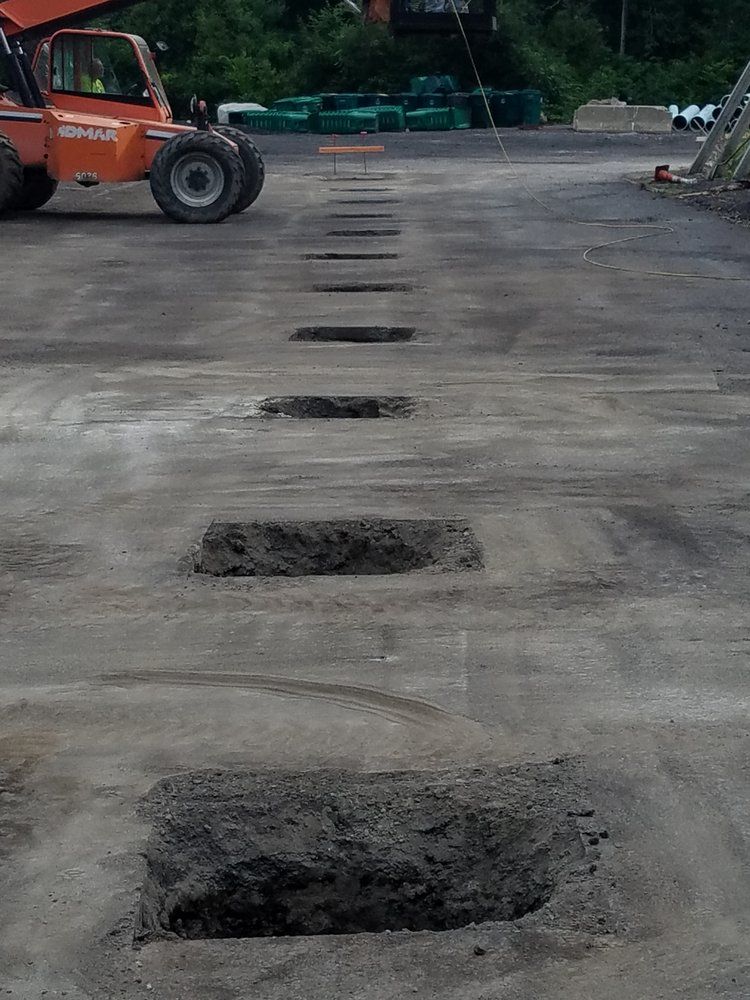
Repair work includes sidewalks, loading docks, pads, foundations, and structural flatwork restoration. Services address crack repair, trip hazard correction, and deterioration mitigation. Code-conscious repairs are performed for public-facing and ADA-sensitive areas. Work is coordinated with site operations to limit business disruption, and durable repair methods are built for heavy-use environments where surfaces endure constant traffic and weather exposure.
Capital Facility Services Corp. can inspect your concrete surfaces in Lancaster and recommend repairs that restore safety and function.
What Happens During Concrete Restoration
Repair begins with surface preparation, which may include grinding down uneven areas, removing loose or spalled concrete, and cleaning cracks to ensure proper bonding. In Lancaster, older concrete often shows surface scaling and joint separation that requires removal before patching materials are applied. New concrete or polymer-modified mixes are poured or troweled into place, then finished to match surrounding surfaces.
After repairs are complete, you will notice level walking surfaces without lips or height differences, loading dock edges that support forklift traffic without crumbling, and foundation pads that sit stable without shifting. Cracks are sealed to prevent water intrusion and further deterioration.
Control joints are re-cut or sealed to accommodate expansion and contraction, and curing compounds are applied to prevent premature drying. Repairs in high-traffic areas use fast-setting materials to reduce downtime. ADA-compliant slopes and transitions are restored where required, and trip hazards are corrected to meet local code standards. Surface treatments such as sealers or non-slip coatings can be applied after curing to extend the life of repaired areas.
Common Concerns Before Scheduling Repairs
Property managers and facility directors often need to understand how long repairs take, what materials are used, and how work affects daily operations. These questions cover the practical details that shape project planning.
How long does repaired concrete take to cure before it can be used?
Standard concrete takes 24 to 48 hours for foot traffic and up to seven days for vehicle loads. Fast-setting mixes can be ready for traffic in as little as four hours, depending on temperature and application.
What causes concrete to crack in the first place?
Cracking results from freeze-thaw cycles, settling subgrade, shrinkage during curing, or overloading beyond design capacity. Repairing the surface without addressing the underlying cause leads to repeated failure.
How are trip hazards corrected without replacing entire slabs?
Grinding or mudjacking lifts sunken sections to match adjacent surfaces. When grinding is not sufficient, partial slab replacement is performed to restore level transitions.
What materials are used for loading dock edge repairs?
High-strength concrete or epoxy-based patching compounds are used to rebuild edges that withstand forklift impact and heavy pallet loads. These materials bond to existing concrete and cure quickly.
How is access maintained during concrete repairs?
Work zones are barricaded and detoured to keep walkways and dock areas accessible. Repairs are scheduled during off-peak hours or phased to limit operational impact.
Capital Facility Services Corp. works with property managers and facility directors across Lancaster to repair concrete surfaces before damage escalates into larger structural issues or safety violations. If your property has cracked sidewalks, damaged loading docks, or uneven pads, reach out to discuss inspection and repair options.